2. July 2026


Summary
Partner: Chalmers University of Technology
Link to the Dataset and to the project page
Location: Gothenburg, Sweden
Solution: brighter AI Precision Blur
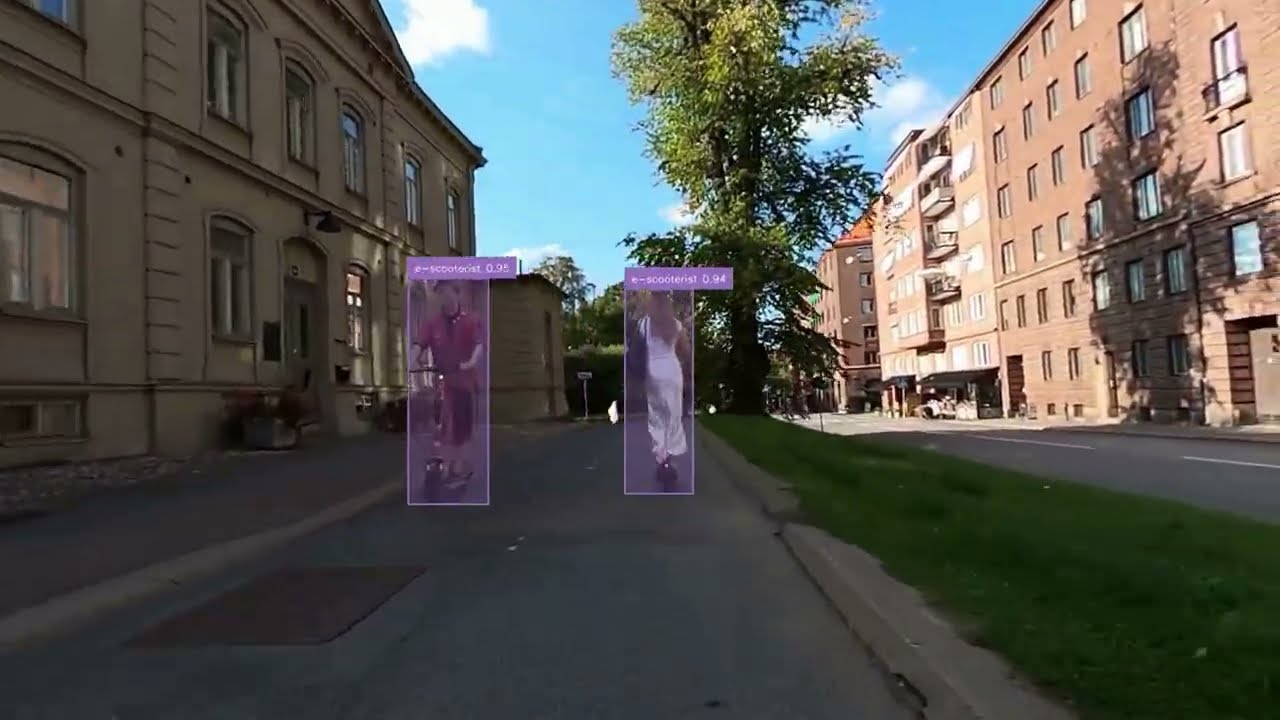
To improve the safety of Vulnerable Road Users (VRUs), researchers at Chalmers University of Technology developed MicroVision, a pioneering dataset focused on the interaction between pedestrians, cyclists, and e-scooterists. However, capturing thousands of high-definition images in public urban spaces posed significant GDPR compliance risks and requesting written consent from each road user is impractical and may compromise the realism of captured scenes. By integrating brighter ai’s Precision Blur, the researchers were able to anonymize over 8,000 full-HD images at scale, ensuring the privacy of Gothenburg’s citizens while maintaining the high data utility required to train state-of-the-art computer vision models and creating a comprehensive micromobility benchmark dataset. The research was carried out within the MicroVision project, funded by Vinnova (Sweden’s innovation agency), the Swedish Energy Agency, and Formas (the Swedish Research Council for Sustainable Development) through the DriveSweden program (reference number 2023-01047).

- Anonymized data set for Micromobility brighter ai & Chalmers University of Technology
The Challenge: Mapping the Sidewalk Safely
Traditional autonomous driving datasets are often captured from a motor vehicle’s perspective and focus primarily on roadway objects. There is a critical lack of data captured from a VRU perspective – the view from a sidewalk, cycle path, or cargo bike. Such data are needed to develop robust safety systems that avoid collisions with micromobility users or vehicles.
The researchers aimed to fill this gap by recording 2,000 unique interaction scenes in Gothenburg. However, this required recording in dense urban environments where hundreds of faces and vehicle license plates would be captured. To publish this as an Open Dataset for the global research community, the team faced a dual challenge:
- Strict Compliance: Adhering to GDPR and Swedish privacy regulations for data collection in public spaces.
- Data Integrity: Ensuring that the anonymization process did not degrade the image quality or obscure the very road users (pedestrians and cyclists) the models were meant to detect.
The Solution: brighter AI Precision Blur
The researchers turned to brighter AI to automate the redaction process. Unlike manual blurring, which is time-prohibitive for 8,000+ frames, or standard “black box” redaction, which can destroy context, brighter AI’s solution provided:
- Automated Detection & Redaction: Highly accurate AI driven detection of faces and license plates across diverse weather conditions and lighting (captured over an entire year).
- Precision and Scale: The ability to handle 8,000 full-HD images while ensuring that only sensitive PII (Personally Identifiable Information) was blurred, leaving the rest of the scene,such as the posture of a cyclist or the frame of an e-scooter,intact for annotation.
- Proven Methodology: Following industry-standard privacy protocols, the team used the Precision Blur service to ensure the dataset could be openly shared without legal risk.
The Result: A New Benchmark for Traffic Safety
The use of brighter ai’s technology directly enabled the successful release of the MicroVision dataset. Key outcomes included:
- High Model Performance: The anonymized images were used to train and evaluate state of the art models including YOLO11, Faster R-CNN, and RF-DETR. The models achieved a mean average precision (mAP) of up to 0.723, similar to the models fitted on the original images, showing that the anonymization did not hinder the models’ ability to learn complex road user behaviors.
- 30,000+ Safe Annotations: The dataset provides granular labels for pedestrians, cyclists, e-scooterists, and stationary micromobility vehicles (MMVs), all within a privacy-compliant framework.
- Public Contribution: By solving the privacy hurdle, Chalmers University was able to host the dataset on public repositories (Researchdata.se, a data platform provided by the Swedish National Data Service), providing a sustainable foundation for future research in AIdriven traffic safety.
“Specifically, faces and vehicle license plates were blurred using the Precision Blur service provided by brighter AI… to help close the gap in existing open image datasets.” Alexander Rasch & Rahul Rajendra Pai, Chalmers University of Technology.
Conclusion
The MicroVision project demonstrates that privacy and progress are not mutually exclusive. By using brighter AI, the researchers at Chalmers University transformed a potential legal liability into a high-value database without compromising the models’ ability to learn complex road user behaviors, paving the way for safer, smarter urban mobility for everyone.